An 18-week marathon guide that explains every run before it asks you to do it. Around 100 pages of plan, theory, strength, fueling and race-day strategy.
Full description
Most marathons don't come apart because the plan was too easy or hard. They come apart because nobody explained which runs actually mattered, what to eat on a three-hour long run, or what to do the week everything goes sideways.
This guide is built to answer those questions before you have to ask them.
Every session tells you what it's for and how it should feel, so you're never running a workout you don't understand. There's a full chapter on adapting the plan when your week refuses to cooperate: which runs to protect, which to move, and how to shift the whole week around one change without wrecking it. Fueling is covered properly, from everyday eating through long-run practice to the morning of the race. So is the taper, which is where a lot of first-timers panic and undo three months of work.
The strength, mobility and plyometric work is written by the physical therapists at our Boulder clinic, who spend their week treating runners. And on race day you get an actual pacing strategy rather than a time to hope for.
The block at a glance 18 weeks including taper and race week. Three to four runs, peaking at 32 to 37 miles, longest run 18 to 20. Run-walk friendly. Deloads every fourth week. Mileage given as a range, so a bad week bends the plan instead of breaking it.
Foundation is a mileage tier, not an experience level. Plenty of runners on their fifth marathon train here because it fits the week they actually have.
Who's behind it Atomic Track Club has grown to more than 400 runners since 2022, with 70 or more at the track every week. The coaches who run those sessions and the physical therapists who keep those runners healthy wrote this guide. We have taken runners from a first structured session to the start line of a marathon, and taken others who assumed their fastest days were behind them to personal bests they had written off years ago.
Also inside: pace charts in miles and kilometers, heart-rate and effort zones built around you, a printable log, and an online tracker pre-filled with every run in your plan.
An 18-week marathon guide that explains every run before it asks you to do it. Around 100 pages of plan, theory, strength, fueling and race-day strategy.
Full description
Most marathons don't come apart because the plan was too easy or hard. They come apart because nobody explained which runs actually mattered, what to eat on a three-hour long run, or what to do the week everything goes sideways.
This guide is built to answer those questions before you have to ask them.
Every session tells you what it's for and how it should feel, so you're never running a workout you don't understand. There's a full chapter on adapting the plan when your week refuses to cooperate: which runs to protect, which to move, and how to shift the whole week around one change without wrecking it. Fueling is covered properly, from everyday eating through long-run practice to the morning of the race. So is the taper, which is where a lot of first-timers panic and undo three months of work.
The strength, mobility and plyometric work is written by the physical therapists at our Boulder clinic, who spend their week treating runners. And on race day you get an actual pacing strategy rather than a time to hope for.
The block at a glance 18 weeks including taper and race week. Three to four runs, peaking at 32 to 37 miles, longest run 18 to 20. Run-walk friendly. Deloads every fourth week. Mileage given as a range, so a bad week bends the plan instead of breaking it.
Foundation is a mileage tier, not an experience level. Plenty of runners on their fifth marathon train here because it fits the week they actually have.
Who's behind it Atomic Track Club has grown to more than 400 runners since 2022, with 70 or more at the track every week. The coaches who run those sessions and the physical therapists who keep those runners healthy wrote this guide. We have taken runners from a first structured session to the start line of a marathon, and taken others who assumed their fastest days were behind them to personal bests they had written off years ago.
Also inside: pace charts in miles and kilometers, heart-rate and effort zones built around you, a printable log, and an online tracker pre-filled with every run in your plan.

 Image 1 of 7
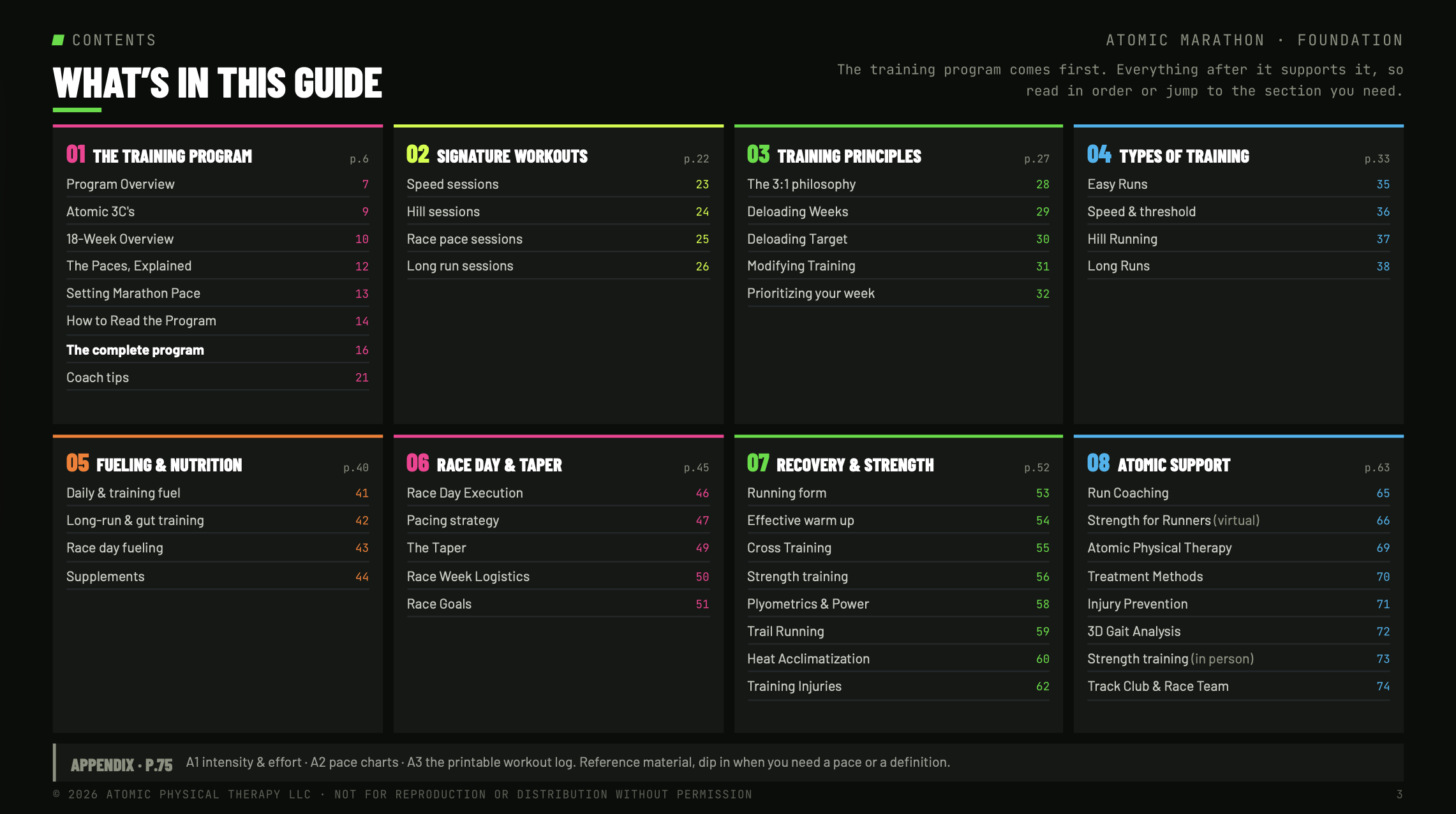 Image 2 of 7
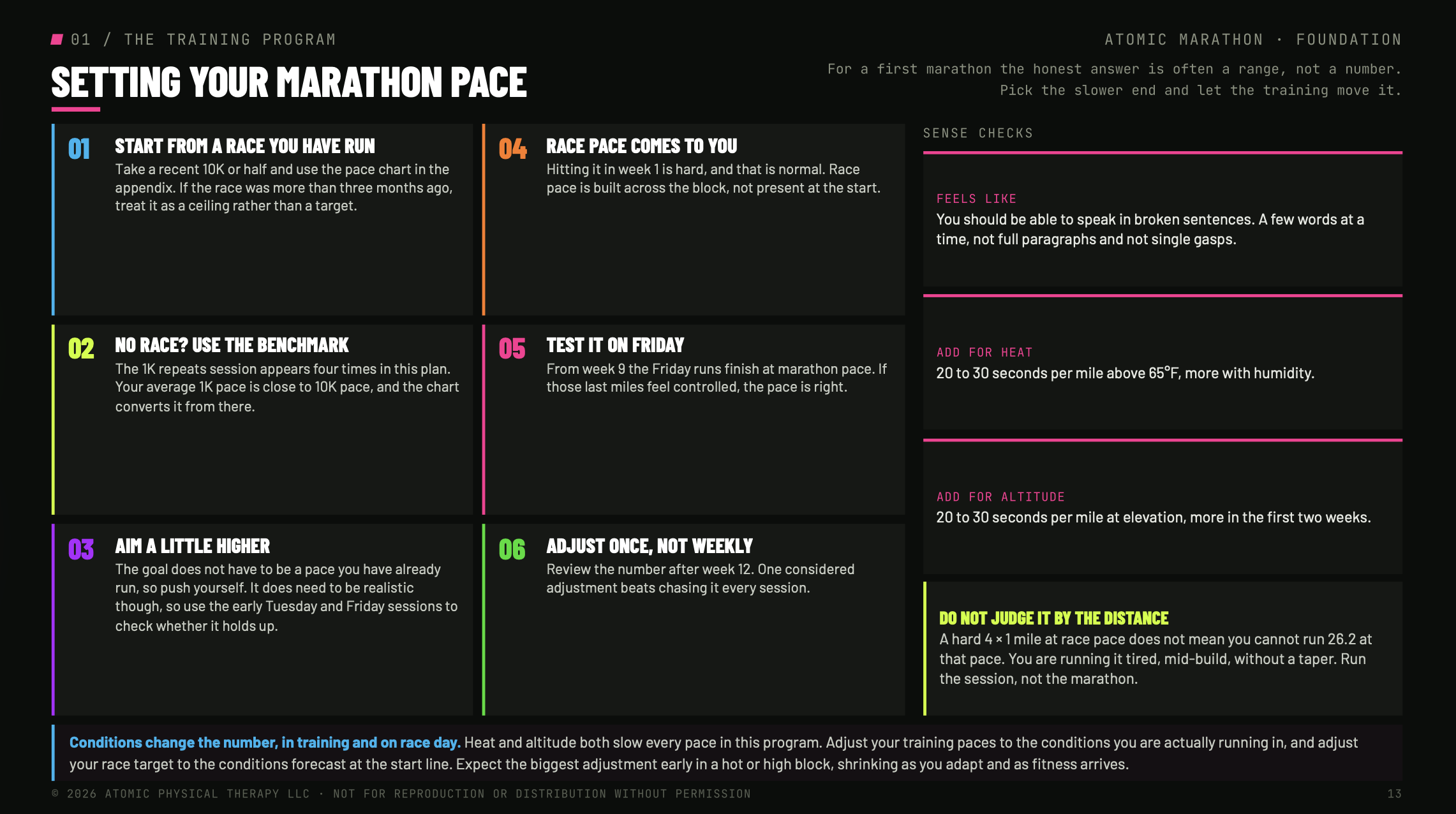 Image 3 of 7
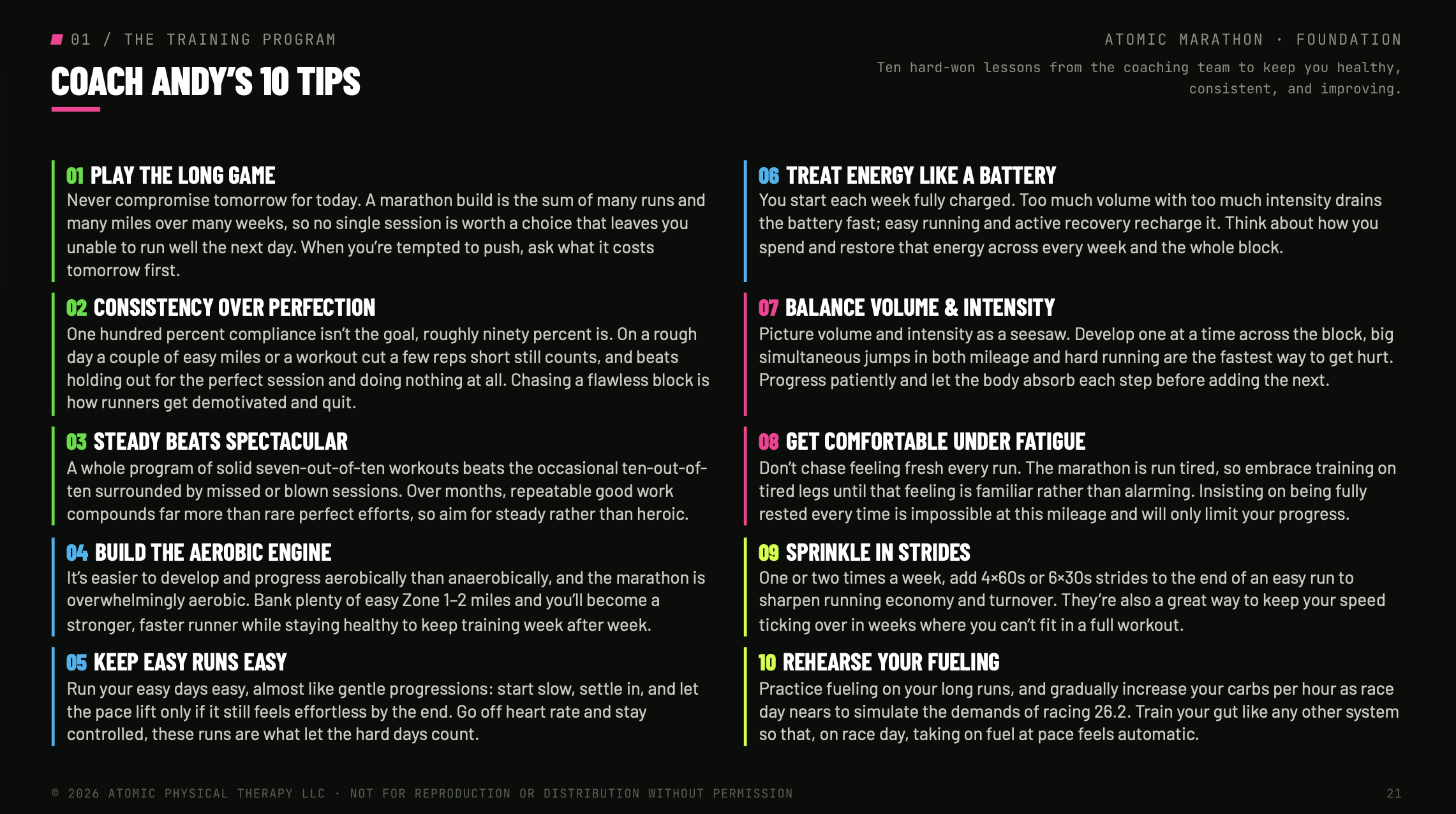 Image 4 of 7
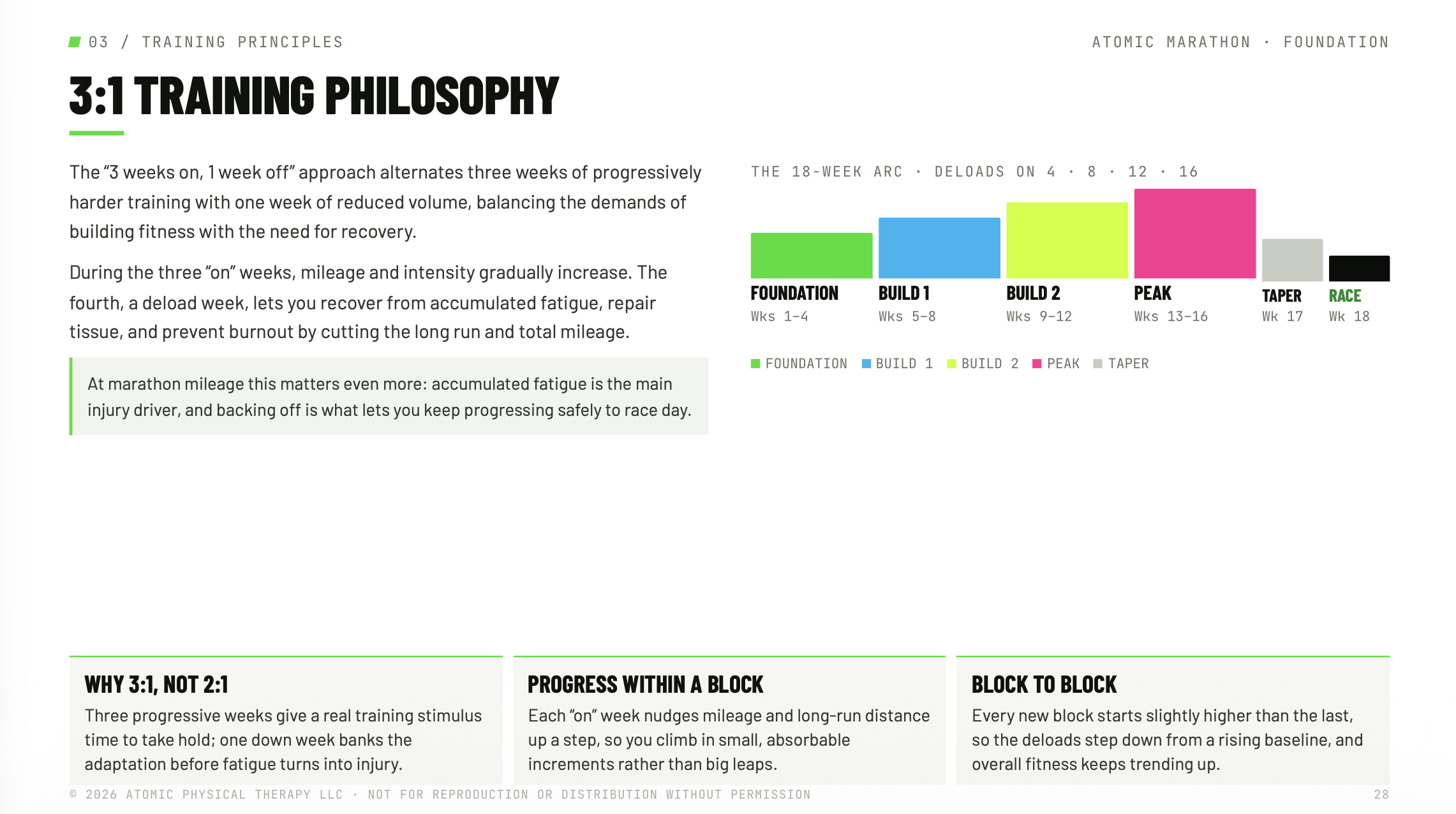 Image 5 of 7
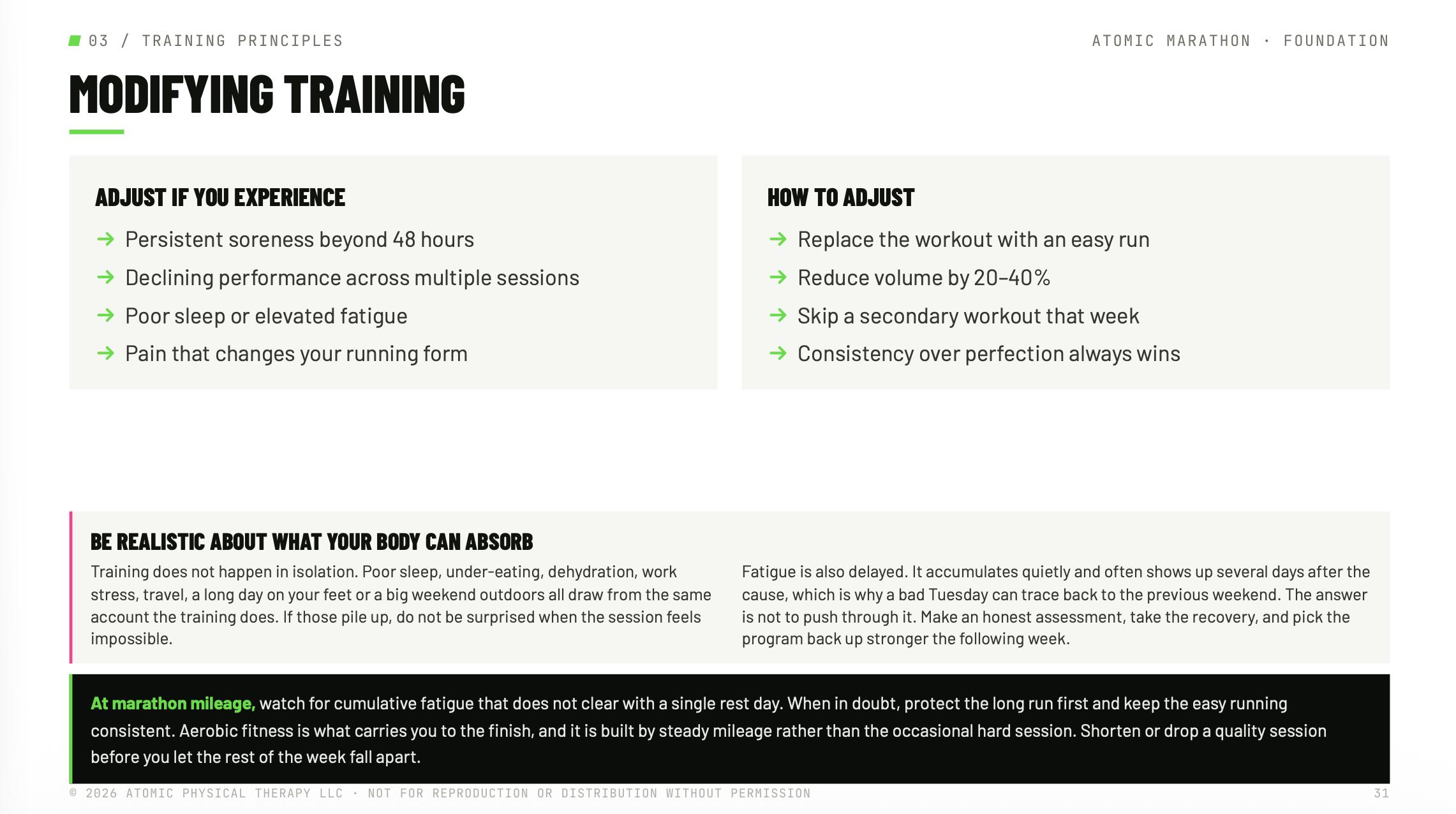 Image 6 of 7
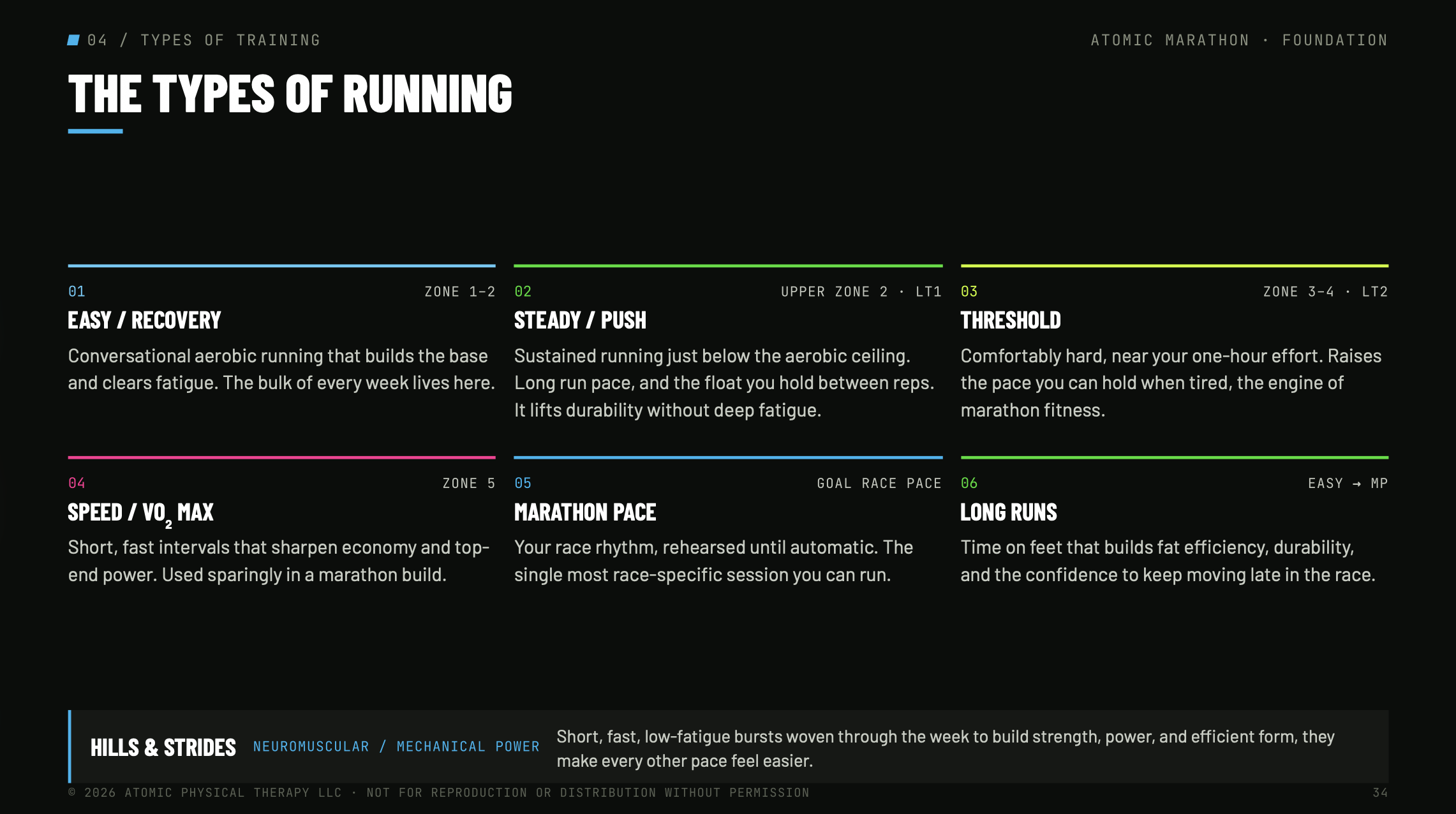 Image 7 of 7