An 18-week marathon program built around your goal pace, with the coaching theory to understand every session. Around 100 pages covering the plan, workouts, strength, fueling, and race strategy.
Full description
There is often a gap between following a plan and actually running a good marathon. Most of the time, that gap comes down to understanding why you are doing each workout and knowing how to adjust before something goes wrong. Why do easy runs need to stay easy? What is threshold work actually doing for your marathon? Why do the training phases come in this order? This guide answers those questions while you train.
It starts by helping you choose a goal pace you can genuinely hold, with an early reality check designed to catch an overly ambitious target in week one rather than week sixteen. From there, almost every session is anchored to that pace. The signature speed, hill, race-pace, and long-run workouts come from blocks our own race team has actually run. Every workout is written out with clear intent, paces, and recoveries, so you know exactly what you are trying to accomplish. Benchmark sessions repeat at four points throughout the build. Because the session stays the same, your splits give you a straightforward measure of whether your fitness is improving instead of leaving you to guess.
The guide also covers the parts that many plans leave out: how to move a session when life gets in the way, why deloads work and what they should actually feel like, taper theory, carbohydrate loading, gut training for long runs, and a race-day pacing strategy. Strength and injury guidance comes from the physical therapists who treat runners in our clinics every week, and it is built into the training rather than treated as an afterthought.
The block at a glance
18 weeks including taper and race week. Four to five runs per week, peaking at 47 to 49 miles, with long runs reaching 20 to 22 miles. A weekly track session anchors the early part of the week, followed by race-pace work, with a second quality session introduced as the block develops. Deloads every fourth week.
Who's behind it
Atomic Track Club is one of Boulder's largest running communities, with more than 400 runners, and a clear pathway from the community into our competitive race team. We've watched runners join us running in the threes and go on to break three hours, sometimes by a wide margin. Others have set personal bests at distances they thought they had left behind in college. This guide is built around the same structure and training principles we use with those athletes.
Also inside
Pace charts in miles and kilometers, heart-rate and effort zones, a printable training log, and an online tracker pre-filled with every run.
An 18-week marathon program built around your goal pace, with the coaching theory to understand every session. Around 100 pages covering the plan, workouts, strength, fueling, and race strategy.
Full description
There is often a gap between following a plan and actually running a good marathon. Most of the time, that gap comes down to understanding why you are doing each workout and knowing how to adjust before something goes wrong. Why do easy runs need to stay easy? What is threshold work actually doing for your marathon? Why do the training phases come in this order? This guide answers those questions while you train.
It starts by helping you choose a goal pace you can genuinely hold, with an early reality check designed to catch an overly ambitious target in week one rather than week sixteen. From there, almost every session is anchored to that pace. The signature speed, hill, race-pace, and long-run workouts come from blocks our own race team has actually run. Every workout is written out with clear intent, paces, and recoveries, so you know exactly what you are trying to accomplish. Benchmark sessions repeat at four points throughout the build. Because the session stays the same, your splits give you a straightforward measure of whether your fitness is improving instead of leaving you to guess.
The guide also covers the parts that many plans leave out: how to move a session when life gets in the way, why deloads work and what they should actually feel like, taper theory, carbohydrate loading, gut training for long runs, and a race-day pacing strategy. Strength and injury guidance comes from the physical therapists who treat runners in our clinics every week, and it is built into the training rather than treated as an afterthought.
The block at a glance
18 weeks including taper and race week. Four to five runs per week, peaking at 47 to 49 miles, with long runs reaching 20 to 22 miles. A weekly track session anchors the early part of the week, followed by race-pace work, with a second quality session introduced as the block develops. Deloads every fourth week.
Who's behind it
Atomic Track Club is one of Boulder's largest running communities, with more than 400 runners, and a clear pathway from the community into our competitive race team. We've watched runners join us running in the threes and go on to break three hours, sometimes by a wide margin. Others have set personal bests at distances they thought they had left behind in college. This guide is built around the same structure and training principles we use with those athletes.
Also inside
Pace charts in miles and kilometers, heart-rate and effort zones, a printable training log, and an online tracker pre-filled with every run.

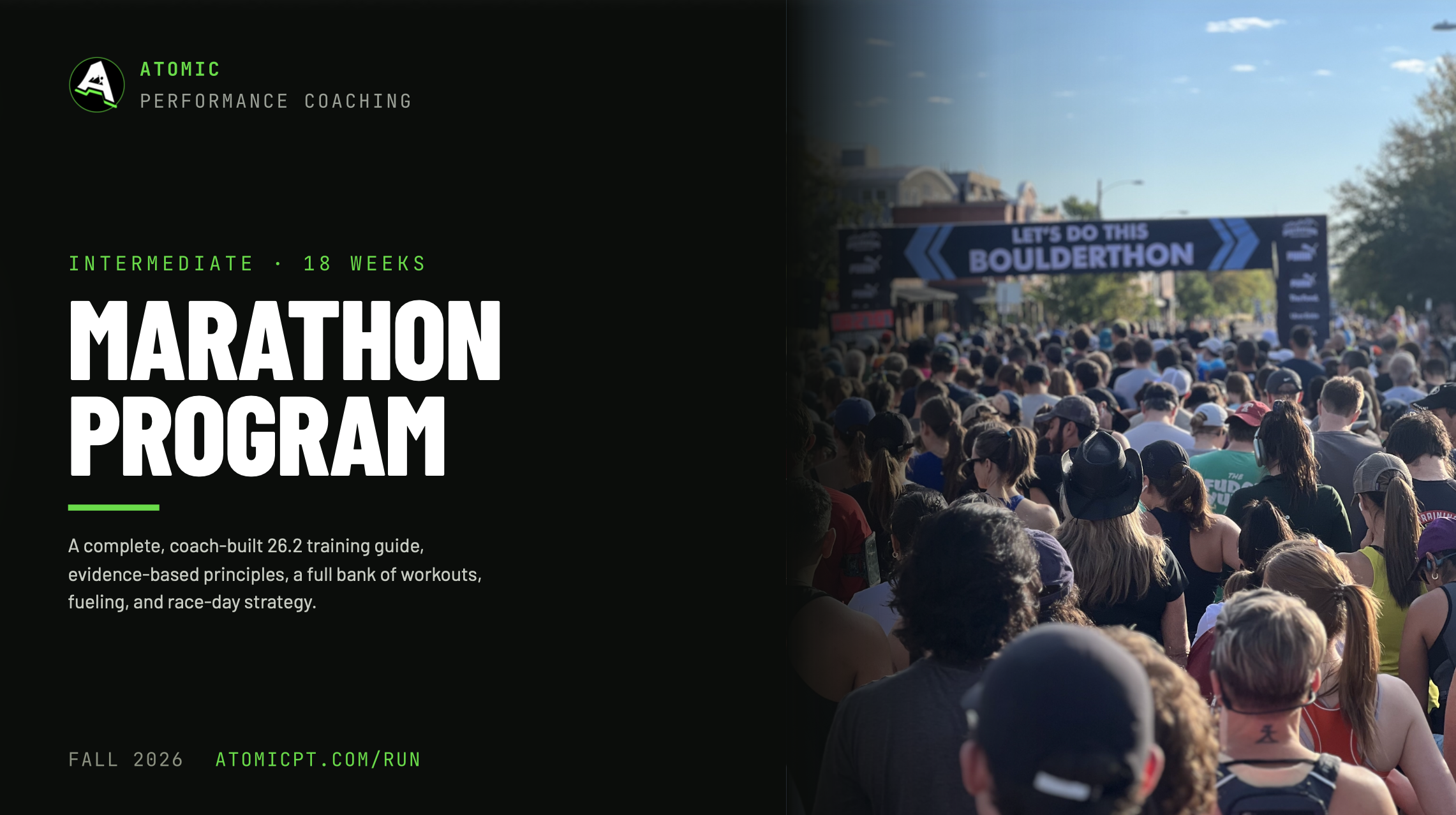 Image 1 of 9
 Image 2 of 9
 Image 3 of 9
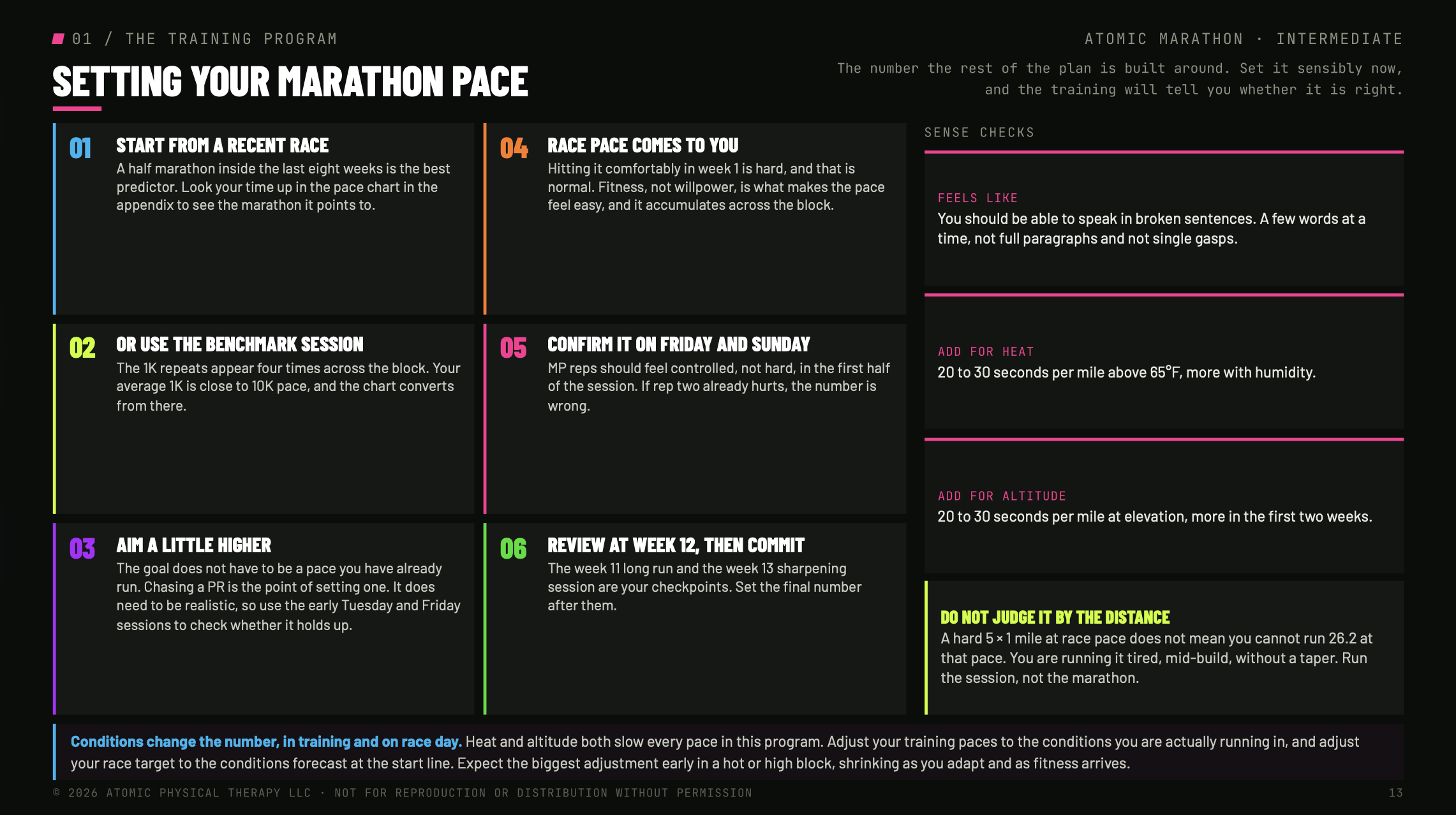 Image 4 of 9
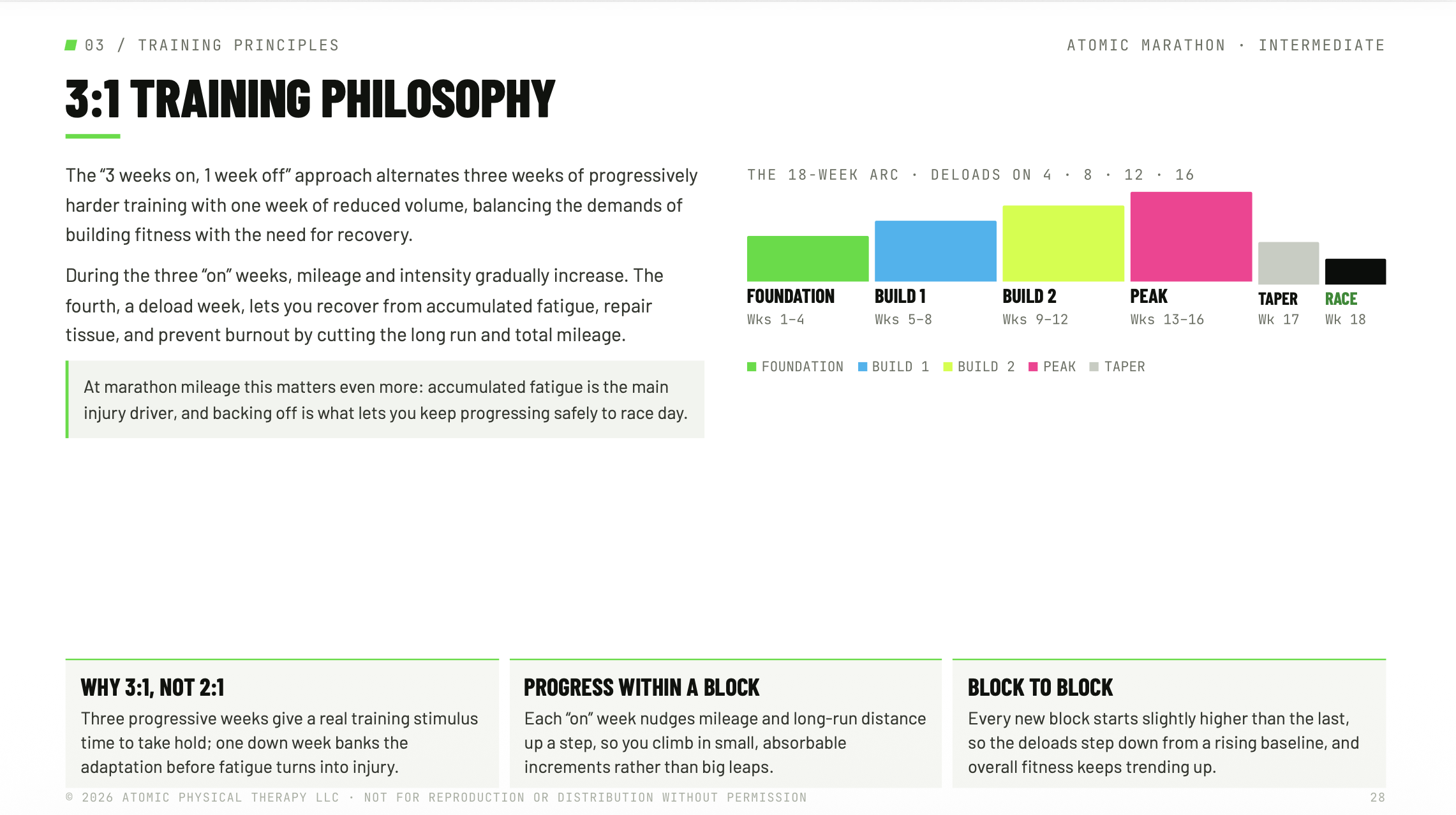 Image 5 of 9
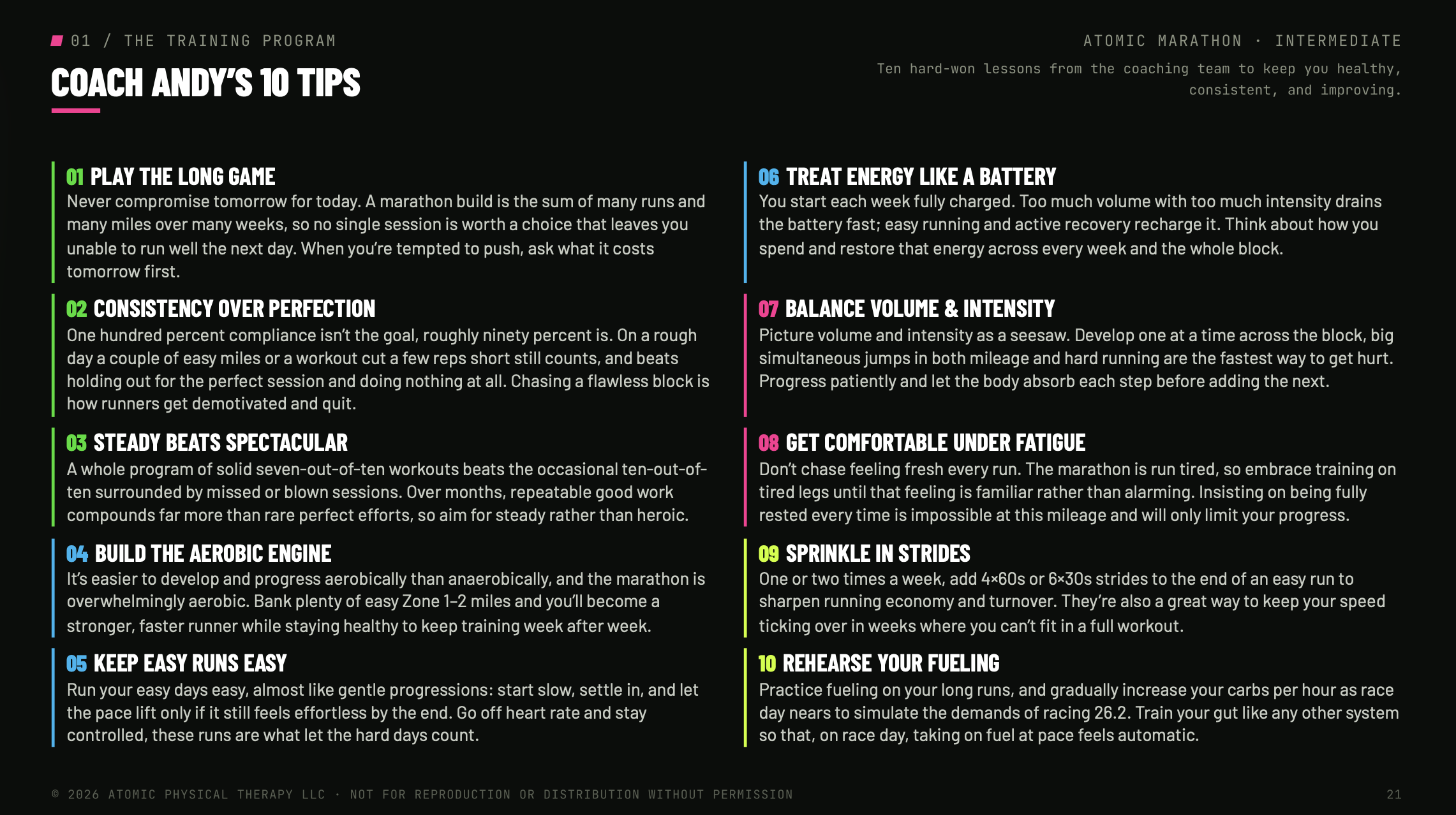 Image 6 of 9
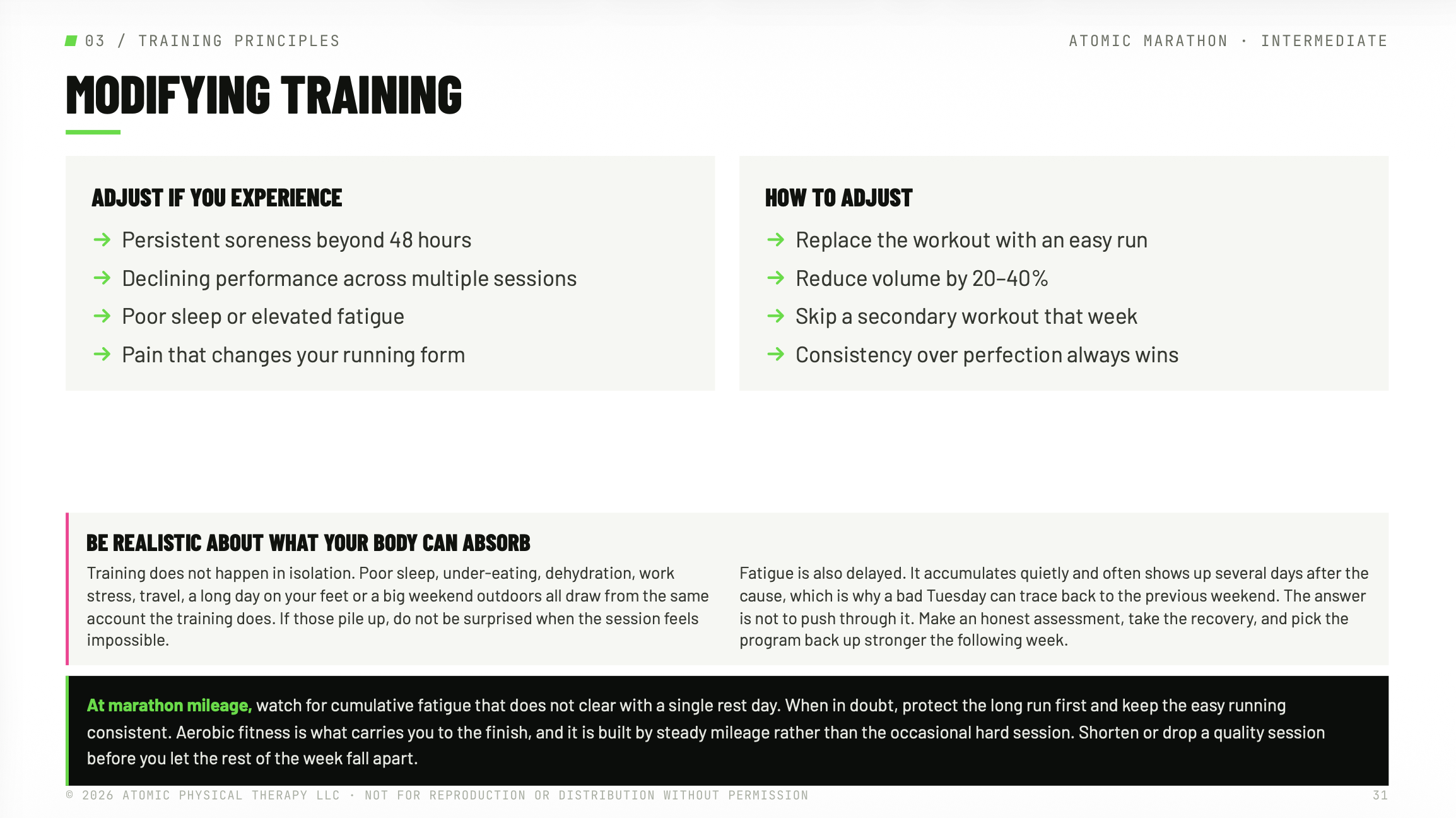 Image 7 of 9
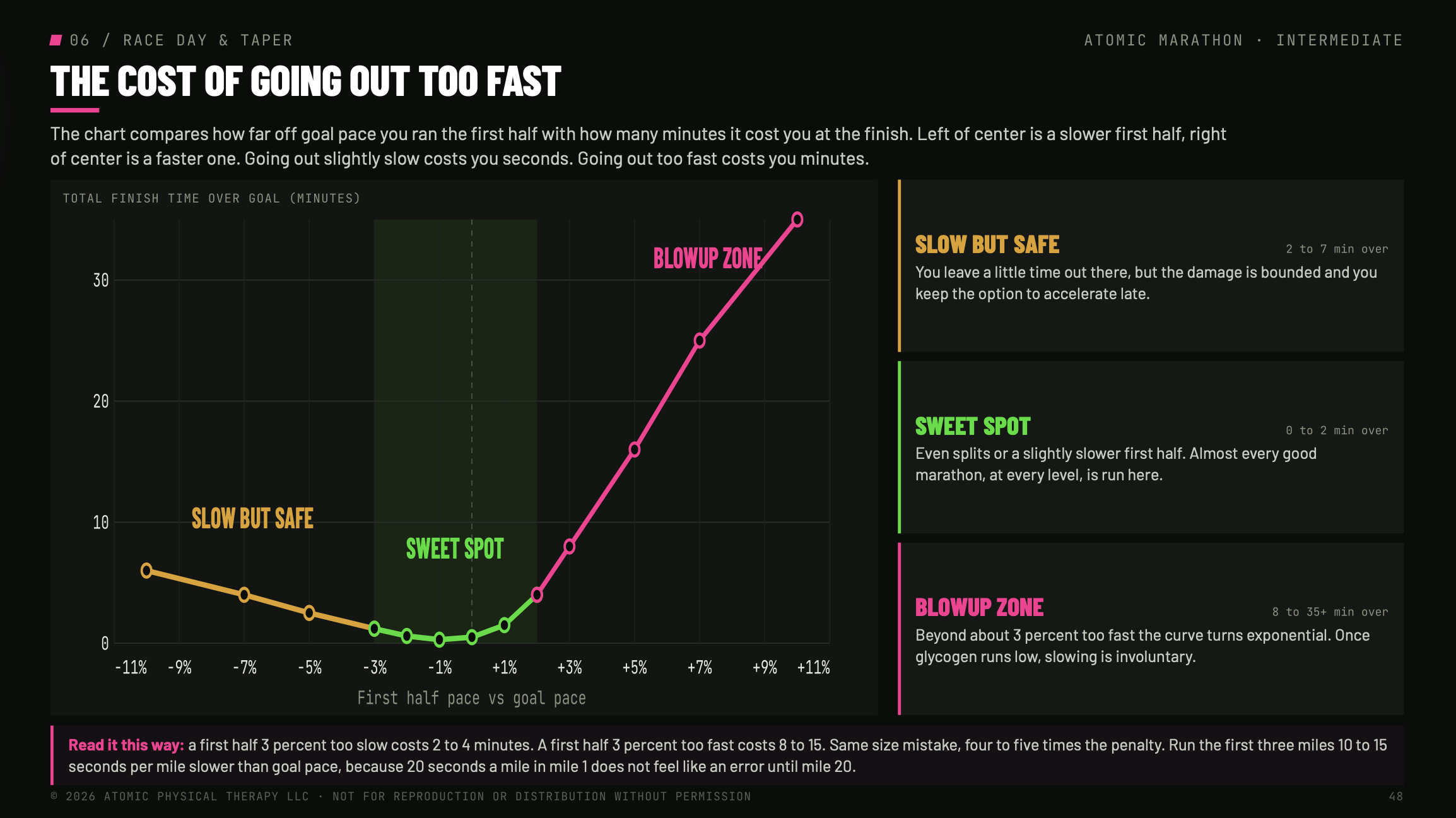 Image 8 of 9
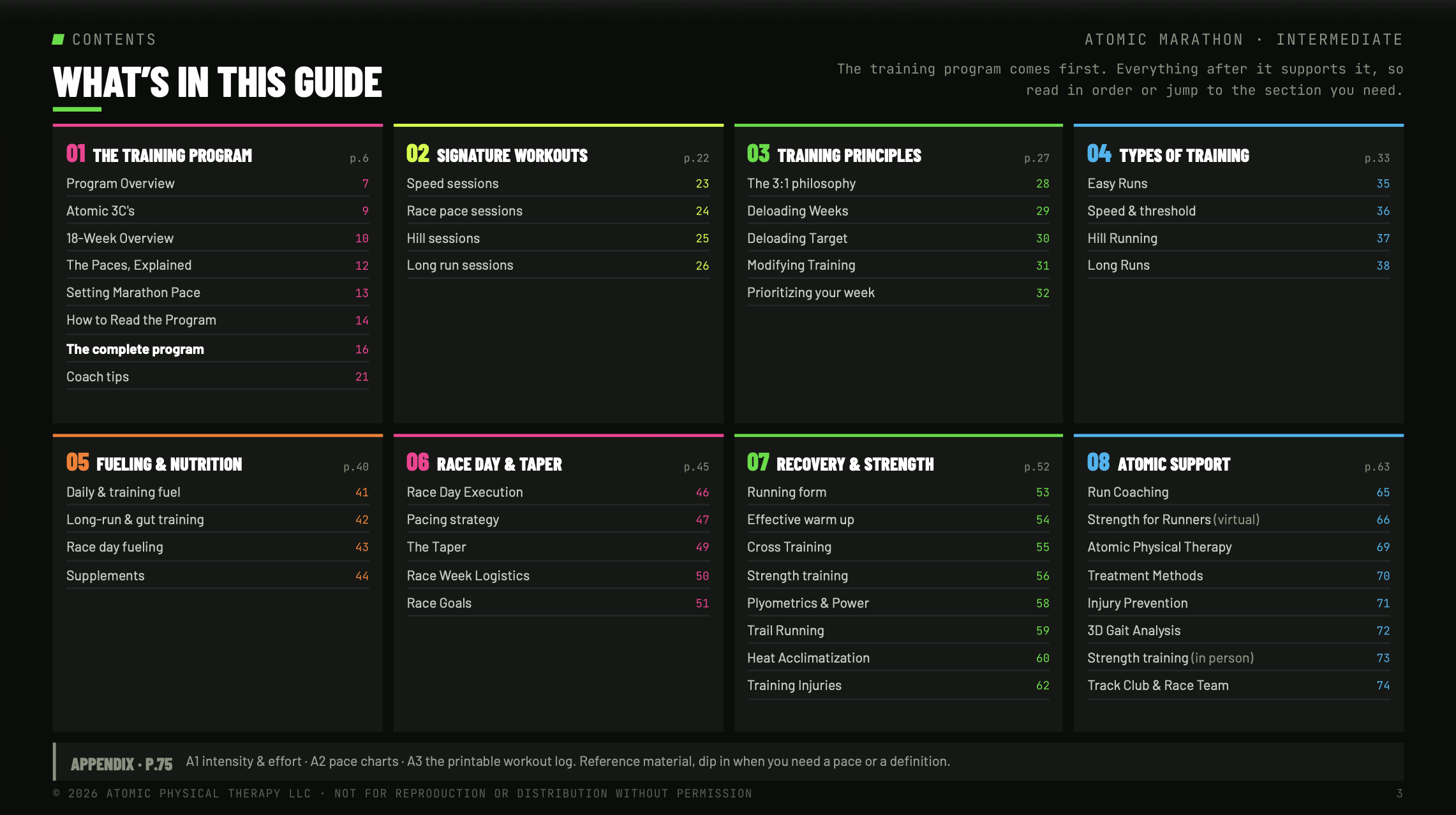 Image 9 of 9