BPPV vs Cervicogenic Vertigo: How Physical Therapy and Upper Cervical Care Work Together
Written by Dr. Alison Bremner of Atlas Chiropractic
Many people diagnosed with vertigo are surprised to learn that dizziness does not always come from the inner ear.
Two common causes 1: Benign Paroxysmal Positional Vertigo (BPPV) and 2: cervicogenic vertigo. Both can feel similar but require very different treatments. While physical therapists often treat inner ear disorders like BPPV, dizziness can also originate from dysfunction in the upper neck, where specialized upper cervical chiropractic care may help. Understanding the difference between these conditions is key to finding the right treatment and avoiding months of frustration. In many cases, the best outcomes occur when physical therapists and upper cervical chiropractors work together to address both balance and cervical spine function.
Why Vertigo Is Often Misunderstood
Vertigo can have multiple causes
Many people assume vertigo always comes from the inner ear, but balance is actually controlled by several systems working together. The brain relies on information from three main sources: the inner ear (vestibular system), the eyes (visual system), and the upper neck (cervical spine). When one of these systems is not functioning properly or when the signals between them do not match, dizziness or vertigo can occur.
Symptoms can feel identical
One of the biggest challenges is that vertigo symptoms often feel the same regardless of their source. Spinning sensations, imbalance, nausea, or head sensitivity can occur whether the problem originates in the inner ear or the neck, which can make self-diagnosis difficult.
Accurate diagnosis is essential
Because symptoms overlap, a thorough evaluation is important to determine where the dizziness is coming from. Identifying the primary contributing system helps guide the most effective treatment and prevents patients from pursuing therapies that may not fully address the cause.
Many patients benefit from collaborative care
Collaborative care can be especially helpful for vertigo patients. Neuro physical therapists are highly trained in evaluating and treating vestibular conditions involving the eyes and inner ear, while upper cervical chiropractors assess how dysfunction in the upper neck may influence balance and spatial awareness. Working together allows providers to address the full balance system and support better patient outcomes.
What Is BPPV? (Inner Ear Vertigo)
Benign Paroxysmal Positional Vertigo (BPPV) is one of the most common causes of vertigo and originates from the inner ear balance system. It occurs when tiny calcium crystals that help detect motion become displaced and interfere with normal balance signaling. This creates brief but intense spinning sensations when the head changes position.
Inner Ear Crystal Displacement
Inside the inner ear are microscopic crystals that normally sit in specific structures responsible for sensing gravity and movement. When these crystals move into the wrong canal, they send incorrect signals to the brain about head position. This mismatch between the inner ear and brain creates the sensation of spinning.
Positional Spinning Episodes
BPPV symptoms are typically triggered by changes in head position rather than occurring constantly. Movements such as lying down, rolling over, or tilting the head can suddenly activate vertigo episodes. Because symptoms depend on position, patients often notice predictable triggers.
Brief but Intense Symptoms
Episodes usually last seconds rather than hours, but the spinning sensation can feel very strong or alarming. Even though symptoms are short, they may repeat frequently throughout the day. Many patients develop anxiety around movement because they anticipate triggering dizziness.
Common Symptoms
Spinning When Rolling in Bed
One of the most classic signs of BPPV is vertigo when turning from one side to the other in bed. The change in head position shifts displaced crystals, triggering sudden spinning. Patients often report needing to move slowly or avoid certain sleeping positions.
Dizziness When Looking Up or Down
Looking upward (such as reaching for something on a shelf) or bending forward can provoke symptoms. These movements stimulate the affected inner ear canal and temporarily disrupt balance signals. The dizziness typically settles once the head becomes still again.
Short Episodes (<1 Minute)
Most BPPV attacks last less than a minute, although lingering imbalance or nausea may follow. The short duration helps distinguish BPPV from other vertigo conditions that cause prolonged dizziness. Despite being brief, repeated episodes can significantly affect daily confidence and mobility.
Typical Treatment
Canalith Repositioning Maneuvers
Specific guided movements, such as the Epley maneuver, are used to move displaced crystals back into their proper location within the inner ear. These maneuvers are performed by trained providers and are often highly effective. Many patients experience improvement after one or several sessions.
Vestibular Rehabilitation
Vestibular therapy uses controlled exercises to help the brain adapt and recalibrate balance processing. These exercises gradually reduce sensitivity to movement and improve stability. Rehabilitation may be recommended when symptoms persist or balance confidence needs rebuilding.
Physical Therapy Involvement
Physical therapists trained in vestibular conditions often assist with balance retraining and movement recovery. Treatment focuses on restoring normal motion, reducing fall risk, and improving coordination. Collaboration between providers can help patients return safely to normal activities.
What Is Cervicogenic Vertigo?
Cervicogenic vertigo refers to dizziness that is connected to problems in the neck rather than the inner ear. The neck contains important sensors that help the brain understand head position and maintain balance. When the neck is irritated, stiff, or not moving properly, these signals can become disrupted, leading to feelings of dizziness or unsteadiness.
Dizziness Related to Neck Dysfunction
The upper neck plays an important role in balance because it constantly communicates with the brain about how your head is positioned. If joints or muscles in the neck are not functioning well, the brain may receive confusing information. This mismatch can create sensations of dizziness or disorientation.
Altered Proprioception From the Cervical Spine
Proprioception is your body’s ability to sense movement and position without looking. The neck has a high concentration of these position sensors, helping coordinate balance with the eyes and inner ears. When these signals are altered, people may feel off-balance or “not quite steady.”
Common Symptoms With Cervicogenic Vertigo
Dizziness With Neck Movement
Symptoms are often triggered or worsened when turning or moving the head. People may notice dizziness when checking blind spots while driving or looking side to side. Keeping the neck still may temporarily reduce symptoms.
Stiffness or Neck Pain
Many patients experience tightness, soreness, or restricted movement in the neck along with dizziness. The discomfort may be mild or chronic and is sometimes overlooked as unrelated. Improving neck function often helps reduce associated symptoms.
Imbalance Rather Than Spinning
Unlike inner ear vertigo, cervicogenic dizziness usually feels like unsteadiness, rocking, or floating instead of intense spinning. Patients often describe feeling “off balance” or disconnected rather than experiencing sudden rotational vertigo.
Headaches or Head Pressure Present
Headaches, especially those starting at the base of the skull, commonly occur alongside cervical dizziness. Some patients also have pressure sensations in the head. These symptoms can share overlapping neck and nervous system involvement.
Dr. Alison Bremner explains how cervicogenic vertigo differs from inner ear vertigo and why some patients benefit from coordinated care between physical therapy and upper cervical chiropractic here.
“If you’re unsure which type of vertigo you’re experiencing, a collaborative evaluation between providers can help guide the right care.”
It is important to remember there are key differences between BPPV and cervicogenic vertigo
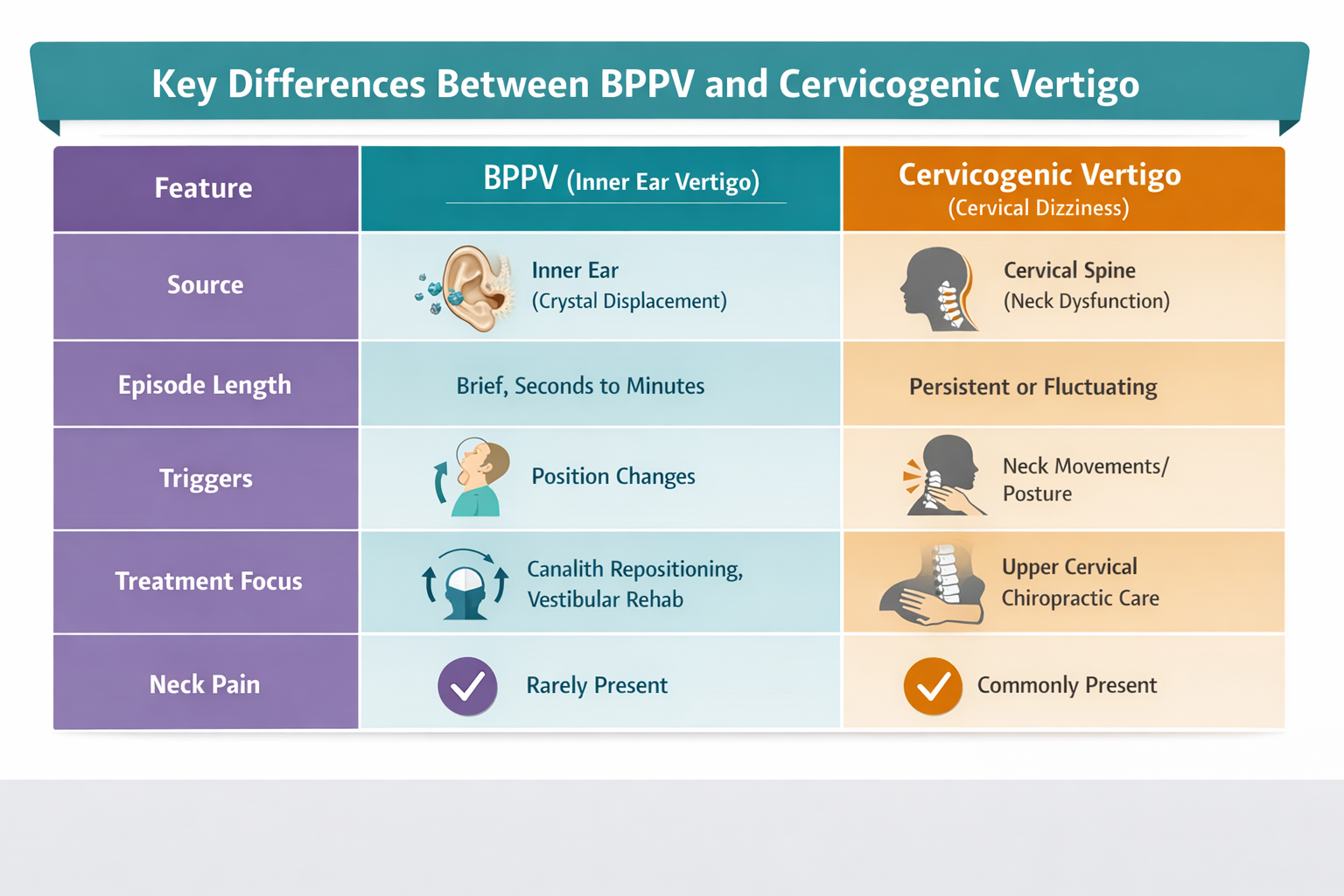
Image created by Dr. Alison Bremner
What Collaborative Care Looks Like With Atomic PT and Atlas Chiropractic
1. Assessment identifies likely cause
2. PT treats inner ear component
3. Upper cervical care addresses cervical contribution
4. Shared patient progress
Vertigo is rarely one-size-fits-all. Understanding whether symptoms originate from the inner ear, the cervical spine, or both can help guide effective care. Collaborative treatment between physical therapy and upper cervical chiropractic care often provides the most complete support for recovery. Click HERE to schedule an appointment with the Atlas Chiropractic team to find out where your vertigo is coming from. If you’re looking for a physical therapy perspective, you can book an evaluation with neurological physical therapist, Dr. Kat, at Atomic Physical Therapy to help assess balance, vestibular, and cervical contributions.